

TimeLine Dec. 9-11 Numismatic Auction explores the ‘Ancient Ways of Finance’ in the form of silver and gold coins
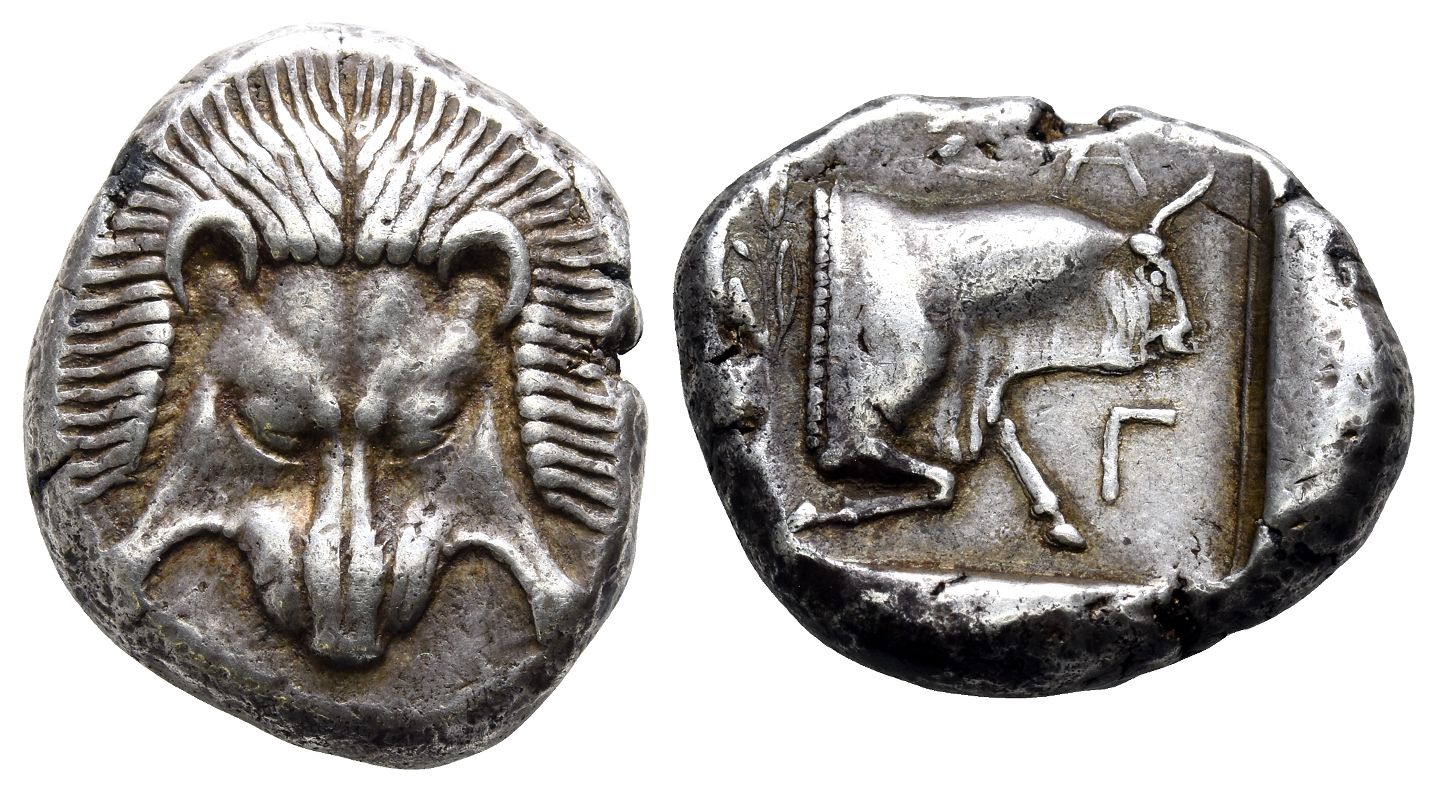
Samos AR Tetradrachm from the islands off Ionia. Dated RY 3 (452/1BC). Near Extremely Fine condition with extensive line of provenance tracing back to a March 1896 auction at Sotheby, Wilkinson & Hodge. Estimate: £12,000-£17,000 ($16,070-$22,770)
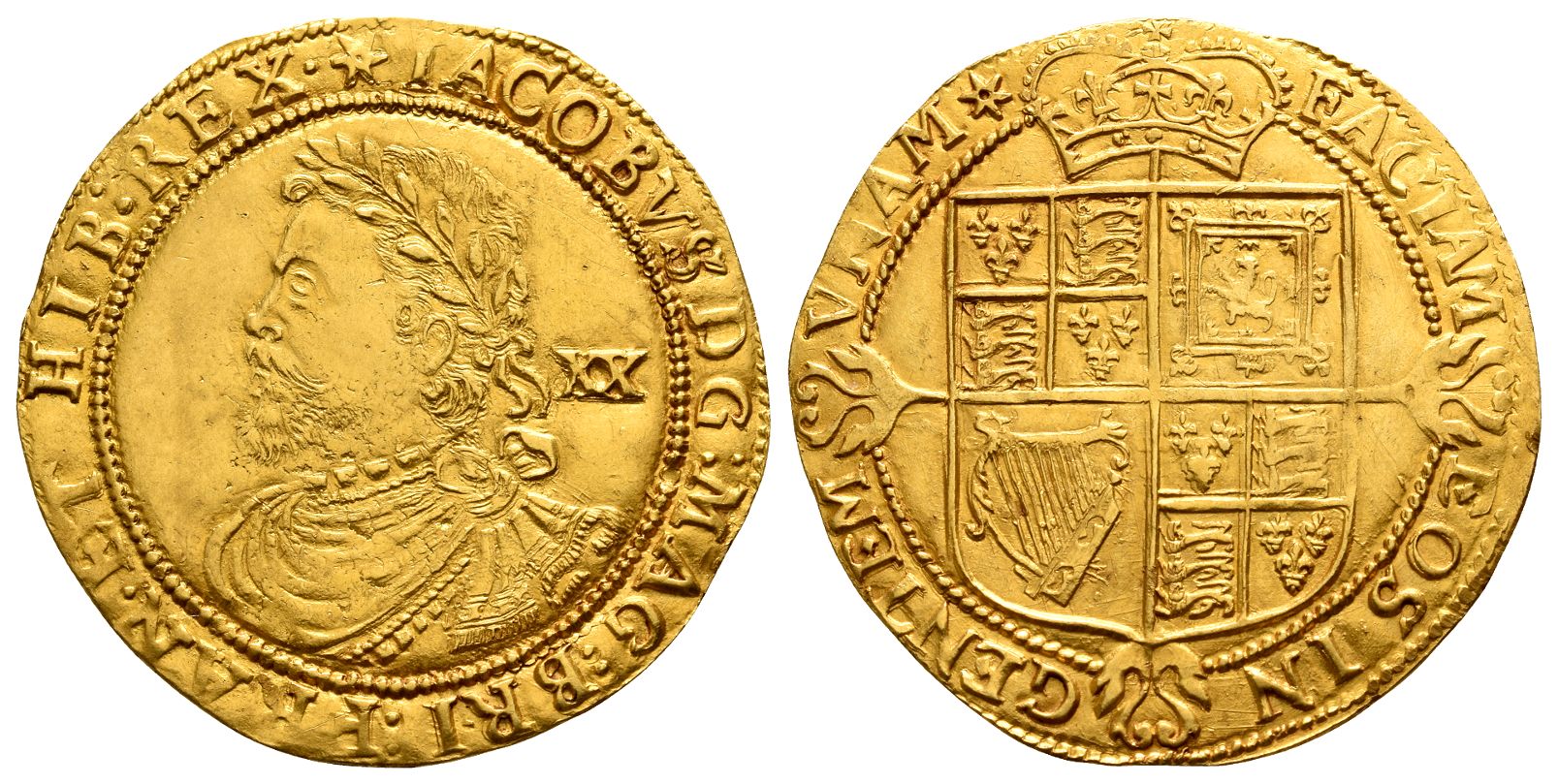
England, James I (Stuart) AV Unite Laurel, struck 1619-1620 at the Tower (London) mint at the time when England and Scotland were first united under one monarch.. Provenance: East Anglia private collection formed in 1980s. £5,000-£7,000 ($6,700-$9,380)
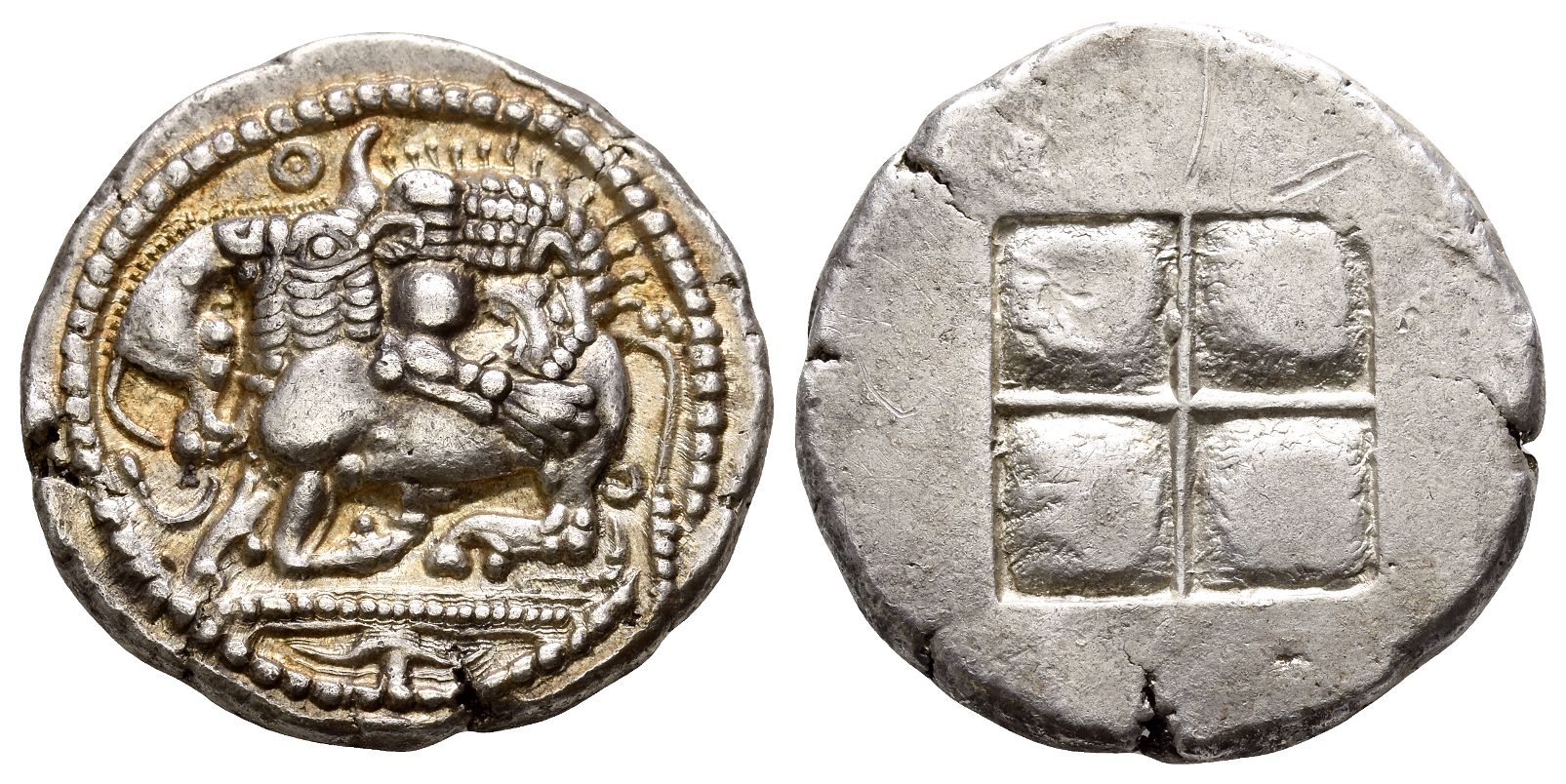
Macedon, Akanthos AR Tetradrachm, circa 525–470 BC. Depicts lion attacking bull. Near Extremely Fine condition. Provenance: Collection of Dr G.W., Germany. Ex Gorny & Mosch Auction, Munich, May 13, 1987. Estimate: £4,000-£6,000 ($5,360-$8,040)
Featured: Only known dated Samos AR Tetradrachm from islands off Ionia; James I AV Unite Laurel gold crown; Henry VIII/Catherine of Aragon AV Double Rose crown
From Greek city-states to Roman emperors to Britain’s early modern monarchs, all who wielded power put their stamp on posterity in the form of coins, which carried authority, paid for wars, fueled trade and preserved political messages. Many of the most significant entities and crowned heads who ever issued coins are represented in TimeLine’s three-day auction, which is packed with desirable, early examples.
A highly-prized Samos AR Tetradrachm from the islands off Ionia is dated RY 3 (452/1BC). This handsome classical Greek tetradrachm reflects the artistic and intellectual culture of Ionia – a league of Greek settlements on the western coast of Anatolia – around the 5th century BC. It depicts a facing lion scalp and forepart of an ox, as well as an olive branch above the date, all within an incuse square. According to CoinArchives, there are no other existing coins of its type that display a date, making it extremely rare.
Graded as being in Near Extremely Fine condition, the Tetradrachm boasts quite an extraordinary line of provenance that can be traced back to a March 1896 auction at Sotheby, Wilkinson & Hodge in London; with a return to the same auction house in May 1902. Subsequently, it was in the Hyman Montagu (1844-1895) collection; the Henry Osborne O’Hagan, Esq (1853-1930) collection; with “Cahn” in 1951; and the property of Bourgey Emile, which was auctioned at Hôtel Drouot (June 1952). The lineage continues with Münzen & Medaillen, Basel, Switzerland; Rollin & Feuardent (William Talbot Ready), London; and a private acquisition from Jean Vinchon, Paris. It now comes to auction at TimeLine to add the next chapter to its illustrious history and has been assigned a pre-sale estimate of £12,000-£17,000 ($16,070-$22,770).
A James Stuart (James I, King of England and Ireland) AV Unite Laurel was struck 1619-1620 at the Tower (London) mint, at the very point in time when England and Scotland were first united under one monarch. A third coinage, second bust gold crown, it features an elegant draped and cuirassed laureate profile of King James on the obverse and a crowned coat-of-arms over a long cross fourchee on the reverse. The devices are well-centered, and the details are sharp. Graded Near Extremely Fine, this coin comes with provenance from an East Anglia private collection formed in the 1980s. Estimate: £5,000-£7,000 ($6,700-$9,380)
A 16th-century power couple that sadly did not last, Henry VIII and his first wife, Catherine of Aragon, are honored in the design of an AV Crown of the Double Rose. Struck 1529–1532 at the Tower (London) mint, this second coinage gold crown is from one of the most dramatic periods in Tudor history and reflects power, politics and a marriage that changed the direction of the English Crown. In Very Fine condition, this coin was found in Wiltshire, UK, in 2014. It will convey to its new owner with a copy of the British Museum’s Portable Antiquities Scheme (PAS) report No. SUR-A78304Z. Estimate: £3,000-£4,000 ($4,020-$5,360)
An exciting early coin, a Macedonian Akanthos AR Tetradrachm, circa 525–470 BC, powerfully depicts a lion attacking a bull, a classic theme of strength and dominance. It has a stylized acanthus flower in the exergue and a quadripartite incuse square. Nicely toned with golden iridescence around the devices on the obverse, its condition is graded as Near Extremely Fine. Its record of provenance includes Dr G W, Germany; and prior to that, a May 1987 auction at Gorny & Mosch, Munich, Germany. Estimate: £4,000-£6,000 ($5,360-$8,040)
From the late 5th to mid-4th century BC, a Thessaly (ancient Greece) Pharsalos AR Drachmis is actually signed by the engraver, Telephantos. It depicts Athena wearing a crested Attic helmet on the obverse. On the reverse, a cavalryman wearing a petasos, chlamys and chiton tunic rides a prancing horse while holding a lagobolon (hunting stick) over his right shoulder, echoing Thessaly’s famous equestrian traditions and its mythic connection to Achilles. In Good/Extremely Fine condition, this coin is sharply struck and surprisingly detailed, with attractive toning and golden iridescence around the devices. From a Swiss collection and acquired prior to 2005, it is estimated at £3,000-£4,000 ($4,020-$5,360).
Dating to circa 60-20 BC, a very rare Celtic Britannia, Eastern North Thames Region AV Stater, uninscribed with a horse image and reversed 'S' motifs, formerly resided in an East Anglia private collection that was formed in the 1980s. It is entered with a £2,000-£3,000 ($2,680-$4,020) estimate.
TimeLine’s December 9-11, 2025 auction will be held live at the company’s headquarters located at The Court House, 363 Main Rd., Harwich, Essex CO12 4DN, UK. Goods may be previewed in person at the gallery by prior arrangement only. Auction start time: 7am US Eastern time/12pm (midday) GMT. All remote forms of bidding will be available, including absentee, by phone (please book phone line 48 hours ahead of time) or live via the Internet through TimeLine’s bidding platform or LiveAuctioneers. TimeLine Auctions accepts payments in GBP and ships worldwide. Questions: call +44 7494 866514 or email Aaron Hammond at ah@timelineauctions.com. Website: https://timelineauctions.com.
Aaron Hammond
TimeLine Auctions
+44 7494 866514
email us here
Legal Disclaimer:
EIN Presswire provides this news content "as is" without warranty of any kind. We do not accept any responsibility or liability for the accuracy, content, images, videos, licenses, completeness, legality, or reliability of the information contained in this article. If you have any complaints or copyright issues related to this article, kindly contact the author above.
